How Should a Food and Beverage Brand Set Up a Trade Show Booth?
November 16, 2026
The short answer: Build the booth around the buyer you want to meet, not around the free food. Put a fast tasting at the aisle, tell your product story in one glance behind it, and keep a small spot for real buyer conversations. Follow the show’s sampling and food-safety rules from the exhibitor manual, hand qualified buyers a sell sheet with the details they need to place an order, and follow up within days while they still remember the taste.
Food trade shows are where specialty retailers, distributors and foodservice buyers find their next products, and every aisle is full of samples. That makes standing out harder for food brands than for almost any other exhibitor. The food trade show booth ideas below are for brands exhibiting at shows such as the Fancy Food shows, produce shows or restaurant shows. If you are looking for food ideas to hand out to booth visitors at a non-food show, that is a different playbook.
Start With the Buyer You Want to Meet
A tasting line full of happy visitors can still be a failed show if none of them buy for a store, a distributor or a menu. Before you design anything, decide who the booth is for:
- Specialty and independent retailers want something new for the shelf, a story they can tell customers, and a minimum order they can afford.
- Distributors and brokers want proof that the product sells, clear case pricing and margins, and a brand that can supply them reliably.
- Chain and grocery category managers want sales data, a promotion plan and packaging that works on their shelves.
- Foodservice and restaurant buyers want pack sizes, yield, prep time and consistency.
Each group needs a different conversation and different information to take away. Many buyers also plan their show route before they arrive, reading trade publications and show coverage to decide which booths to visit. Learning how specialty food retailers discover new products will help you plan what they should see before and during the show.
Lay Out the Booth in Three Zones
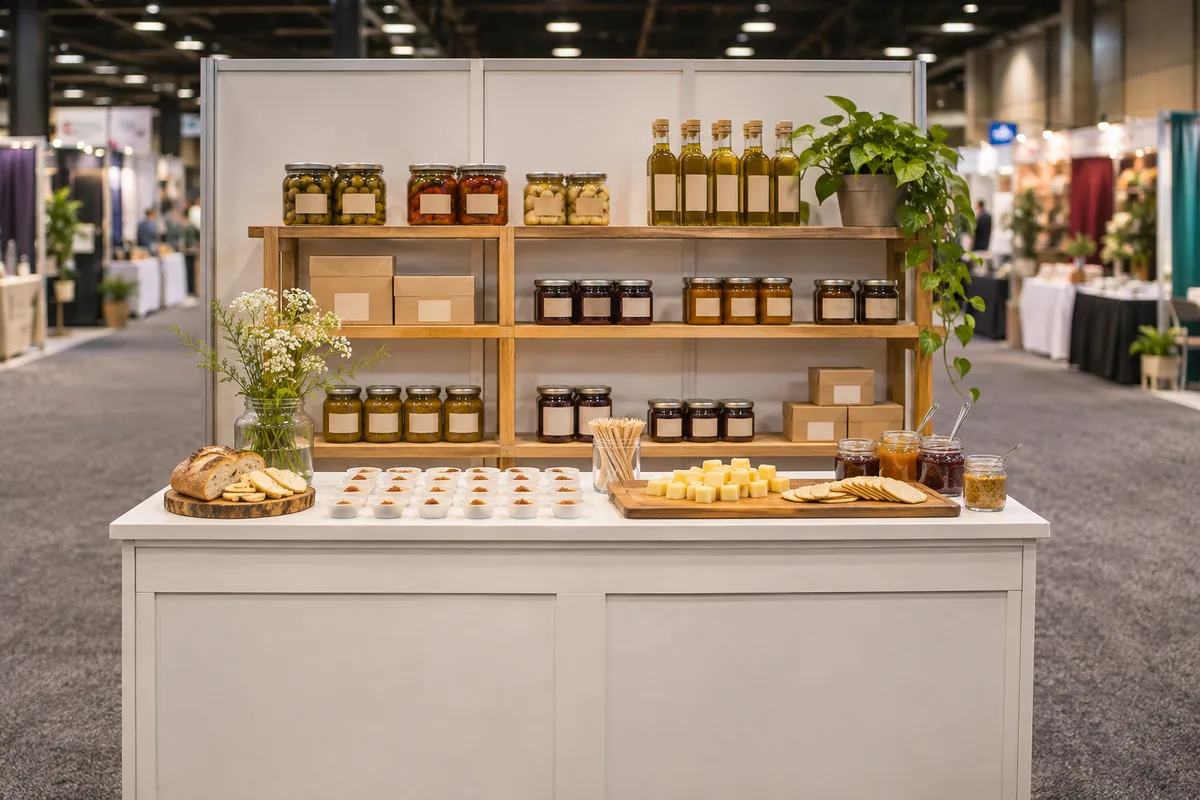
Most first-time food exhibitors have a small inline booth, and the most common mistake is turning all of it into a sampling table. A better layout splits even a small space into three zones:
- Tasting zone (at the aisle). A counter at the front edge with samples ready to hand out. The goal is a taste in a few seconds without blocking the aisle or trapping people in a line.
- Story zone (behind or above the tasting). Your brand name, product category and the one reason to care, readable from the aisle at eye level or higher. Show the real packaging on shelves or risers so buyers can picture it in their store.
- Buyer zone (to one side or at the back). A small table, stools or a standing counter where a buyer can sit down for five minutes, look at the sell sheet and talk numbers away from the sampling crowd.
Plan the practical details early, because they decide what the booth can actually do: power for refrigeration or warming, ice and storage, a place for trash, and room for staff to move. Write them down before you order furniture or display pieces.
Plan Sampling Around the Show’s Rules
Sampling is the reason buyers stop, but it is also the most regulated part of a food booth. Every show and venue publishes its own rules in the exhibitor manual or service kit, and they often require a sampling approval form before the show. The venue’s caterer may control what food and drink can be brought in, and local health departments may require a permit, a handwashing setup or both.

The details vary from show to show. For example, the International Fresh Produce Association’s on-site food sampling and handling requirements for its Global Produce & Floral Show ask exhibitors to:
- avoid bare-hand contact with food and wear gloves, hair nets and clean aprons;
- hold hot foods at 140°F or above and cold foods at 41°F or below;
- keep food and utensils at least six inches off the floor;
- prepackage any self-service items and never offer samples from a common bowl or tray.
Another show may set different portion limits or temperatures. The FDA Food Code is a model that states and local health departments adopt and change, so always follow the current manual for your show and the venue’s rules, not a checklist from a different event.
A few habits make sampling work harder for you:
- Sample your hero product, not the whole line. One or two items that are easy to taste tell a clearer story than eight.
- Pre-portion samples so staff can hand them out quickly and safely.
- Use the tasting to qualify. Ask one question while they taste: “Where do you buy for?” The answer tells your team who to bring to the buyer zone.
Build a Buyer-Ready Sell Sheet
A buyer who likes the taste will ask for the numbers next. A one-page sell sheet gives them everything they need to say yes later, and it saves your team from answering the same questions all day. Include:
| What to include | Why buyers need it |
|---|---|
| Product photo, name and flavors/SKUs | So they remember which booth and which item |
| Case pack, unit size and case dimensions | To check shelf space and order quantities |
| Wholesale price, suggested retail price and minimum order | To work out margin and whether they can afford a test order |
| Shelf life and storage (ambient, refrigerated or frozen) | To know if it fits their store or warehouse |
| UPC or item codes | To set the product up in their systems |
| Certifications and claims you can prove | Organic, non-GMO, gluten-free and similar labels matter to many specialty buyers |
| How to buy: direct, distributor or broker | So they know who to call after the show |
| Contact name, email, phone and booth number | So the follow-up reaches the right person |
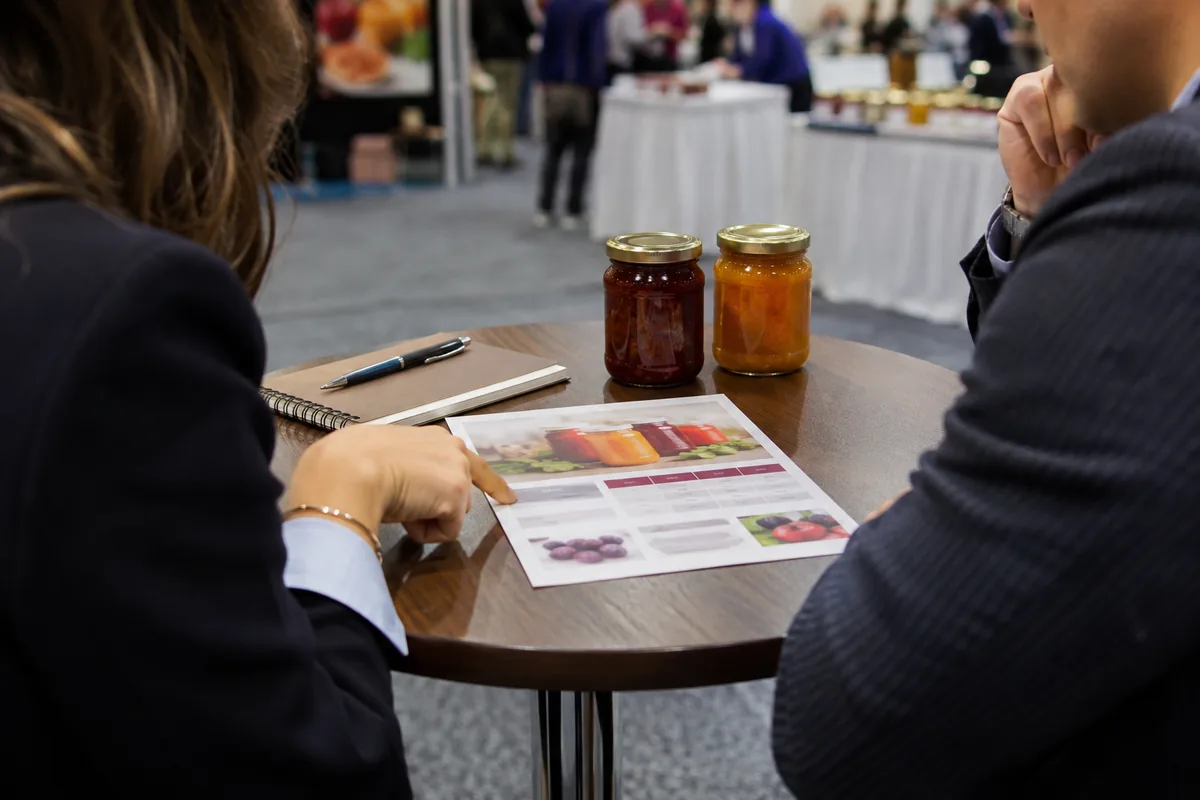
Print enough copies for qualified buyers and keep a digital version ready to send by email or through a QR code at the counter. Leave pricing off anything you hand to every visitor if you prefer to share it only with buyers.
Staff the Booth So Sales Can Sell
The person who can negotiate with a buyer should not be stuck refilling sample cups. Give everyone in the booth one clear job:
- Samplers keep the tasting moving, ask the qualifying question and introduce buyers to the sales lead.
- Sales lead or founder handles buyer conversations in the buyer zone and takes notes on each one.
- Runner restocks samples, ice and sell sheets, keeps the booth clean and covers breaks.
Brief the whole team before the doors open on your prices, case packs, lead times, distributor coverage and the answers to the questions buyers ask most. Schedule important buyer meetings in advance, and hold them away from the busiest hours if you can.
Reach Buyers Before They Walk the Floor
The best booth traffic is planned before the show starts. Buyers read show previews, new product sections and the show daily that is handed out at the entrances to decide which booths to visit. A few steps put your booth on that list:
- Email your current customers and target buyers two to four weeks before the show with your booth number and what you are launching.
- Advertise in the show edition of a trade publication that is distributed at your show. Gourmet News show editions, for example, reach the specialty food trade at the Summer and Winter Fancy Food shows, and Oser publishes many other food and beverage trade publications for specific shows and categories.
- Make the ad do one job: show the product, the reason to stop and the booth number. Our guide to design a show daily ad that drives booth traffic walks through the elements, sizes and file checklist.
- Book early. Ad space and editorial deadlines for show issues close weeks before the show, so reserve space when you confirm your booth.
The next big show for specialty food is close: the Specialty Food Association lists its Winter FancyFaire for January 17-19, 2027, in San Francisco, and the Summer Fancy Food Show for July 25-27, 2027, in New York.
Follow Up While the Tasting Is Fresh
Buyers taste hundreds of products at a food show. Your follow-up is what turns a good tasting into an order. Plan it before the show:
- At the booth: write a note on every buyer lead (store or company, what they tasted, what they asked for, next step) and tag it as retailer, distributor, foodservice or press.
- Within two to three business days: send each qualified buyer a short, personal email with the sell sheet, the item they liked and the next step you agreed on.
- Within two weeks: ship the samples you promised, then call or email to confirm they arrived and ask about a test order.
- After the show: compare leads and orders to what you spent, so you know which shows and which advertising to repeat.
For more on sorting and prioritizing contacts, see our guide to following up on trade show leads.
Food Trade Show Booth Checklist
| When | What to do |
|---|---|
| 3 or more months before | Choose the show, book the booth, read the exhibitor manual and note every deadline |
| 2-3 months before | Reserve ad space in the show edition, plan the three-zone layout, order power and refrigeration |
| 6-8 weeks before | Submit sampling approval forms and any health permits, finalize the sell sheet and send ad materials |
| 2-4 weeks before | Email customers and target buyers with your booth number, book buyer meetings, brief the team |
| Show days | Sample fast and safely, qualify every taster, take notes on every buyer lead |
| 2 weeks after | Send follow-up emails and samples, confirm test orders, review results against your goals |
Use these timings as a starting point and replace them with the dates in your show’s manual and your publication’s insertion order.
Frequently Asked Questions
How much food should I bring to a food trade show?
It depends on attendance, the number of show days and your portion size. Start from the expected number of samples per hour, multiply by show hours, and add extra for buyer meetings and samples you promise to ship. Check the show’s rules on portion sizes and storage before you finalize it.
Do I need a permit to give out food samples at a trade show?
Often, yes. Many shows require a sampling approval form, the venue’s caterer may restrict outside food and drink, and the local health department may require a temporary food permit or handwashing setup. The exhibitor manual for your show explains what applies.
What should a food sell sheet include?
Product name and photo, SKUs, case pack and dimensions, wholesale and suggested retail prices, minimum order, shelf life and storage, UPC codes, certifications you can prove, how to buy, and a contact with your booth number.
What is the best booth layout for a small food booth?
Split it into three zones: a tasting counter at the aisle, a clear product story behind it, and a small spot to one side where a buyer can sit down and talk numbers.
How can a small food brand get buyers to the booth?
Tell buyers where you will be before the show: email current and target buyers, advertise in the show edition of a trade publication distributed at the event, and give them a clear reason to stop, such as a product launch or a tasting.